
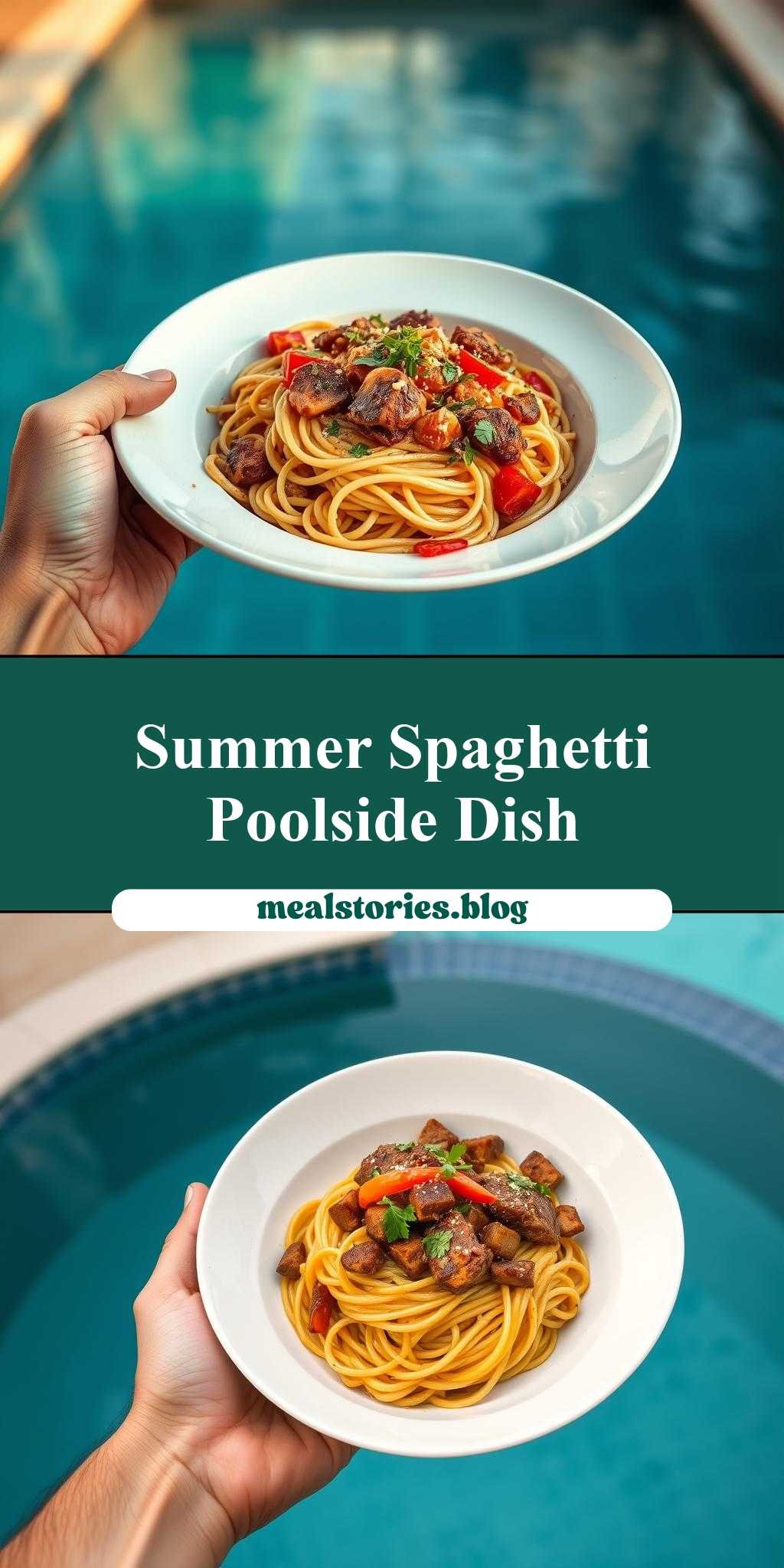
What’s the perfect poolside meal? This homemade spaghetti with meat and sautéed vegetables is a quick and easy weeknight dinner solution, featuring tender ground beef and fresh bell peppers – Save this idea
a person holding a bowl of spaghetti with meat and vegetables on top, in front of a swimming pool
Introduction
Imagine a warm summer day, lounging by the swimming pool, and indulging in a delicious, satisfying bowl of spaghetti loaded with savory meat and an assortment of colorful vegetables. This dish is not just a meal; it’s an experience that combines ease of preparation, flavor, and creativity, all using everyday ingredients that you might already have in your kitchen. The beauty of this recipe lies in its ability to bring people together, whether it’s a family dinner, a pool party, or a simple, quiet evening for one. With its rich flavors and hearty portions, it’s sure to become a favorite. So, let’s dive into the world of this mouth-watering spaghetti dish and explore what makes it so special.
Why This Works
- Flavor balance and ingredient accessibility: The combination of spaghetti, meat, and vegetables creates a perfect balance of flavors and textures, and the best part is that these ingredients are easily accessible in most supermarkets.
- Ease of preparation: Despite its impressive appearance and taste, this dish is surprisingly easy to prepare. It requires minimal cooking skills and can be ready in under an hour, making it perfect for both beginners and experienced cooks.
- Impressive results with minimal effort: The presentation of the dish, with its vibrant vegetables and savory meat atop a bed of spaghetti, is sure to impress your guests or family members, all achieved with relatively minimal effort in the kitchen.
Key Ingredients
The main ingredients for this recipe include spaghetti, ground beef or alternative meat of your choice, onion, garlic, bell peppers, tomatoes (fresh or canned), olive oil, salt, pepper, and any other desired spices or herbs. For practical substitutions, you can use different types of protein like chicken, tofu, or beans for a vegetarian option, and various vegetables such as mushrooms, zucchini, or carrots to add more variety to the dish. The beauty of this recipe is its flexibility, allowing you to customize it based on your dietary preferences and the ingredients you have available.
Instructions
- Step 1: Begin by preparing your ingredients. Chop the onion, garlic, and bell peppers into bite-sized pieces. If using fresh tomatoes, dice them as well. Measure out your spaghetti and have your ground beef or alternative protein ready.
- Step 2: Cook your spaghetti in boiling, salted water until it’s al dente. Reserve a cup of pasta water before draining the spaghetti, as this can be used later to adjust the sauce’s consistency if needed.
- Step 3: In a large skillet, heat a couple of tablespoons of olive oil over medium heat. Add the chopped onion and cook until it’s translucent, then add the garlic and cook for another minute, ensuring it doesn’t burn. Add the ground beef, breaking it apart with a spoon as it cooks, until it’s fully browned. Then, add the bell peppers and cook until they start to soften. Finally, add the tomatoes, salt, pepper, and any desired spices or herbs, stirring well to combine.
- Step 4: Once the sauce has simmered for about 10-15 minutes and the flavors have melded together, add the cooked spaghetti to the skillet, tossing everything together. If the sauce seems too thick, you can add a bit of the reserved pasta water. Serve hot, topped with grated cheese and any additional vegetables or meats you like.
Handy Tips
- Always use high-quality ingredients, especially the tomatoes, as they form the base of the sauce. Fresh tomatoes will give a brighter flavor, while canned tomatoes provide a richer, deeper taste.
- Don’t overcook the spaghetti. Al dente texture is key to a good spaghetti dish, as it provides a nice bite and texture contrast to the soft sauce and vegetables.
- Experiment with different spices and herbs to give your dish a personal touch. Basil, oregano, and bay leaves are classics, but you can also try paprika, chili flakes, or parsley for a unique flavor profile.
Heat Control
Heat control is crucial in this recipe, especially when cooking the ground beef and the spaghetti. For the beef, medium heat is ideal to prevent burning and to ensure even browning. For the spaghetti, a rolling boil is necessary, but be sure to reduce the heat once the spaghetti is added to prevent overcooking. The sauce should simmer at a low to medium heat to allow the flavors to meld together without burning or sticking to the bottom of the pan.
Crunch Factor
The crunch factor in this dish comes from the vegetables, particularly the bell peppers and any additional vegetables you might add on top, such as chopped fresh tomatoes or shredded carrots. To achieve a nice crunch, make sure not to overcook the vegetables. They should be tender but still crisp when bitten into. If you’re adding any nuts or seeds for extra crunch, sprinkle them on top just before serving to preserve their texture.
Pro Kitchen Tricks
- Use a mixture of ground meats for a more complex flavor profile. Combining beef, pork, and veal can create a rich, meaty sauce reminiscent of traditional Italian recipes.
- Acidity balances flavor. A squeeze of fresh lemon juice or a splash of red wine can enhance the flavors of the tomatoes and meat, adding depth to the sauce.
- Let the sauce rest. After cooking, let the sauce sit for at least 30 minutes to allow the flavors to meld together. This step can elevate the dish significantly, making the sauce taste richer and more integrated.
Storage Tips
- Leftover storage: Cool the dish to room temperature, then refrigerate or freeze it. For refrigeration, use an airtight container and consume within 3 days. For freezing, portion the dish into freezer-safe bags or containers and store for up to 3 months.
- Reheating tips: For refrigerated leftovers, reheat gently in the microwave or on the stovetop, adding a bit of water if the sauce has thickened. For frozen leftovers, thaw overnight in the refrigerator, then reheat as desired.
- Shelf life and best containers: The dish is best consumed fresh, but leftovers can be safely stored as described. Use glass or plastic airtight containers for refrigeration and freezer-safe bags or containers for freezing.
Gift Packaging Ideas
If you’re considering gifting this dish, perhaps for a potluck or as a care package, consider packaging it in a way that preserves its freshness and presentation. Use insulated containers to keep the dish warm during transport, and garnish with fresh herbs or a sprinkle of cheese just before serving. For a more rustic touch, serve it in a wooden bowl or a vintage pasta server, adding a personal note or a sprinkle of parmesan cheese on top.
Flavor Variations
- Different spices: Try adding a pinch of cumin for a smoky flavor, some dried oregano for an earthy note, or red pepper flakes for a spicy kick.
- Creative toppings: In addition to the standard grated parmesan, consider topping your spaghetti with toasted pine nuts, roasted vegetables, or even a fried egg for added richness.
- Ingredient swaps: Substitute the ground beef with ground turkey, pork, or lamb for a different flavor profile. You can also use vegetarian alternatives like mushrooms or eggplant to create a meatless version.
Troubleshooting
- Texture problems: If the spaghetti is overcooked, it becomes mushy. Conversely, undercooked spaghetti is hard and unpleasant. Adjust your cooking time based on the package instructions and your personal preference for doneness.
- Ingredient replacements: If you’re missing an ingredient, don’t be afraid to substitute. For example, if you don’t have bell peppers, you could use zucchini or mushrooms instead.
- Over/undercooking signs: Keep an eye on your dish as it cooks. The sauce should simmer gently, and the meat should be fully browned. The spaghetti should have a bit of bite to it, and the vegetables should be tender but crisp.
FAQs
- Can I freeze it? Yes, you can freeze this dish. Portion it into freezer-safe containers or bags and store for up to 3 months. Thaw overnight in the refrigerator before reheating.
- Is it gluten-free? Traditional spaghetti contains gluten, but you can easily make this dish gluten-free by substituting the spaghetti with gluten-free pasta made from rice, quinoa, or corn.
- Can I double the recipe? Absolutely. Simply double all the ingredients and adjust the cooking time slightly, especially for the spaghetti and the sauce, to ensure everything is cooked through and heated evenly.
Conclusion
In conclusion, this spaghetti with meat and vegetables is a versatile, flavorful, and satisfying dish that can be enjoyed in a variety of settings. Whether you’re cooking for one, planning a family dinner, or preparing for a gathering by the pool, this recipe is sure to please. With its easy preparation, rich flavors, and the ability to customize it to your taste, it’s a great addition to any meal repertoire. So, go ahead, give it a try, and don’t hesitate to experiment and make it your own. Happy cooking, and buon appetito!
a person holding a bowl of spaghetti with meat and vegetables on top, in front of a swimming pool
A delicious and easy-to-make spaghetti dish loaded with savory meat and an assortment of colorful vegetables, perfect for any occasion.
🥘 Ingredients
👩🍳 Instructions
-
1Cook the spaghetti in boiling, salted water until al dente. Reserve 1 cup of pasta water before draining.
-
2In a large skillet, heat the olive oil over medium heat. Add the chopped onion and cook until translucent, then add the garlic and cook for 1 minute.
-
3Add the ground beef to the skillet, breaking it apart with a spoon as it cooks, until fully browned.
-
4Add the sliced bell peppers and mixed vegetables to the skillet. Cook until the vegetables start to soften.
-
5Add the tomato sauce to the skillet, stirring to combine. Bring the sauce to a simmer and let cook for 10-15 minutes, stirring occasionally.
-
6Add the cooked spaghetti to the skillet, tossing to combine with the sauce. If the sauce seems too thick, add a bit of the reserved pasta water.
-
7Season with salt and pepper to taste, then serve hot, topped with grated parmesan cheese.