
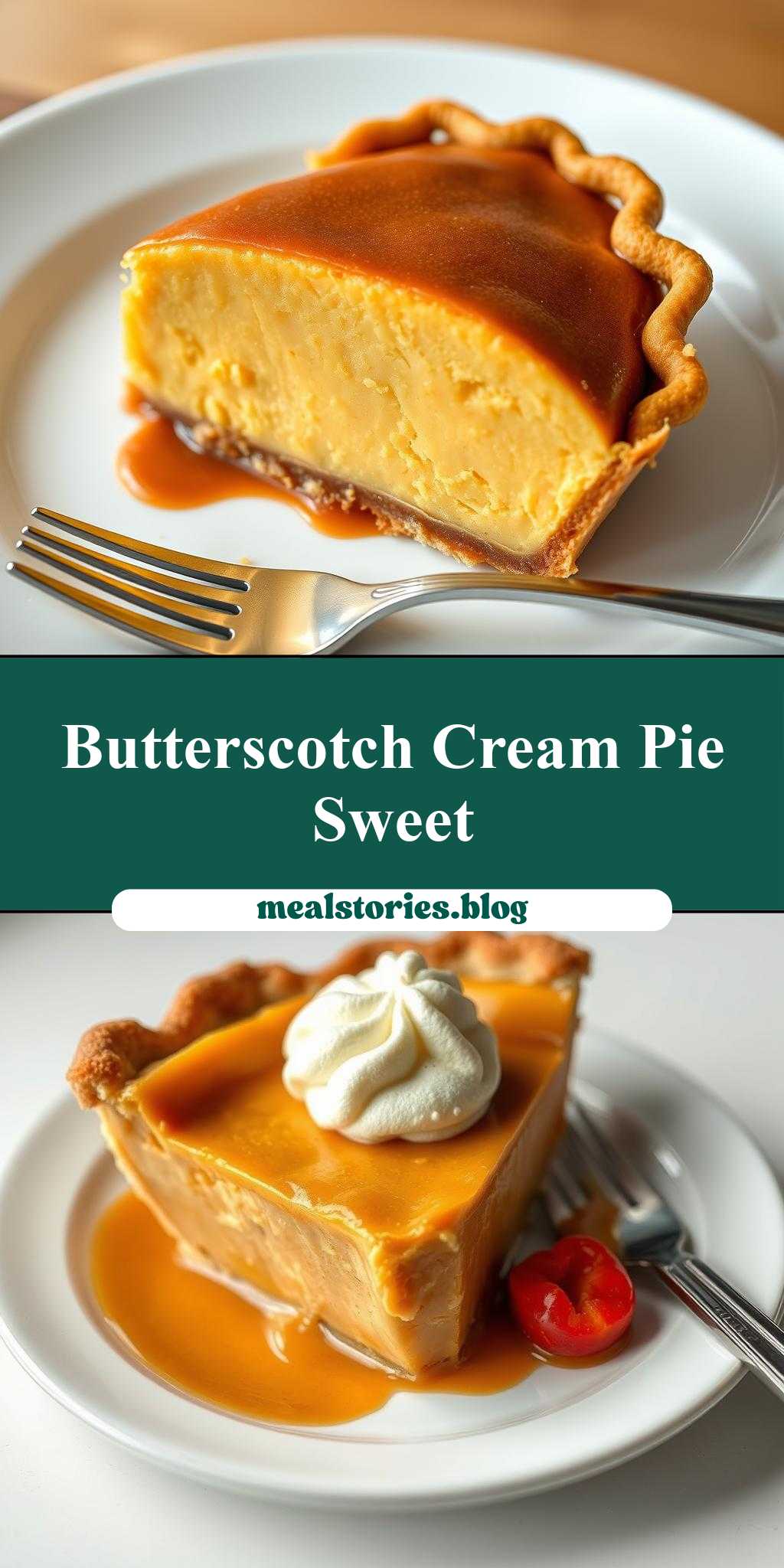
What makes a classic dessert truly unforgettable? For me, it’s the combination of creamy texture and deep butterscotch flavor in this easy homemade pie, made with melted brown sugar and a touch of vanilla. Perfect for a quick weeknight dessert or family favorite treat. Save this idea for a sweet surprise anytime.
Butterscotch Pie
Introduction
Imagine a dessert so divine, it transports you back to a time of simplicity and warmth, where the sweetness of butterscotch fills the air and tantalizes your taste buds. The Butterscotch Pie is more than just a dessert; it’s an experience that combines the richness of caramel, the depth of brown sugar, and the creaminess of butter to create a truly unique flavor profile. What’s even more enticing is how accessible this recipe is, using everyday ingredients that you might already have in your pantry. It’s a testament to the magic of cooking, where creativity meets simplicity to produce something truly extraordinary.
Why This Works
- Flavor balance and ingredient accessibility: The beauty of the Butterscotch Pie lies in its balance of flavors, where each ingredient complements the others to create a harmonious taste experience. Moreover, the ingredients are easily accessible, making this dessert achievable for anyone with a passion for baking.
- Ease of preparation: One of the most appealing aspects of this recipe is its simplicity. With clear, step-by-step instructions, you can effortlessly navigate the preparation process, even if you’re a beginner in the kitchen.
- Impressive results with minimal effort: Despite its simplicity, the Butterscotch Pie yields impressive results. The combination of textures and flavors is sure to impress your family and friends, making it an ideal dessert for gatherings and special occasions.
Key Ingredients
The Butterscotch Pie relies on a few key ingredients to achieve its distinctive flavor and texture. These include brown sugar, which provides a deep, caramel-like flavor; heavy cream, which adds richness and creaminess; eggs, which serve as a binder and contribute to the pie’s texture; and, of course, butter, the star of the show, which gives the pie its name and characteristic butterscotch flavor. For those looking for substitutions, you can experiment with different types of sugar or creamy alternatives, though the traditional ingredients yield the most authentic results.
Instructions
- Step 1: Begin by preheating your oven to 350°F (175°C). While the oven is warming up, prepare your ingredients. This includes measuring out your brown sugar, heavy cream, eggs, and melting your butter. It’s also a good time to make your pie crust, either from scratch or using a pre-made crust.
- Step 2: In a medium saucepan, combine the brown sugar, melted butter, and heavy cream. Place the saucepan over medium heat and cook, stirring occasionally, until the sugar has dissolved. Bring the mixture to a boil, then reduce the heat to medium-low and simmer for about 5 minutes, or until the mixture thickens slightly.
- Step 3: Remove the saucepan from the heat and let it cool slightly. Beat in your eggs until they are fully incorporated and the mixture is smooth. Pour the butterscotch filling into your prepared pie crust.
- Step 4: Bake the pie for about 40-50 minutes, or until the filling is set and the crust is golden brown. Remove the pie from the oven and let it cool on a wire rack. Once cooled, you can serve it warm or chilled, depending on your preference.
Handy Tips
- One of the most helpful tips for making a Butterscotch Pie is to not overbake it. The filling should be set but still slightly jiggly in the center. Overbaking can cause the filling to become too firm and lose its creamy texture.
- Another tip is to use high-quality ingredients. The flavor of your butterscotch pie will only be as good as the ingredients you put into it, so choose the best brown sugar, real butter, and fresh eggs you can find.
- Lastly, don’t be afraid to experiment. While traditional butterscotch pie is delicious, you can also play with different flavors like adding a pinch of sea salt or a teaspoon of vanilla extract to give your pie a unique twist.
Heat Control
Heat control is crucial when making a Butterscotch Pie, especially during the cooking of the butterscotch filling. It’s important to cook the filling over medium heat, stirring occasionally, to prevent it from burning or becoming too dark. When simmering the mixture, keep an eye on it to ensure it doesn’t boil over. The ideal temperature for baking the pie is 350°F (175°C), and the pie is done when the edges are set, and the center is just slightly jiggly. This indicates that the pie is cooked through but still retains its creamy texture.
Crunch Factor
The crunch factor in a Butterscotch Pie comes from the pie crust, which should be golden brown and crispy after baking. To achieve this, make sure your oven is at the right temperature, and don’t overbake the pie. The filling should be creamy and smooth, providing a beautiful contrast to the crunchy crust. If you’re feeling extra creative, you can also add a crunchy topping, like chopped nuts or a sprinkle of sea salt, to enhance the textural experience of the pie.
Pro Kitchen Tricks
- One pro trick is to blind bake your pie crust before filling it. This involves lining the crust with parchment paper, filling it with pie weights, and baking it for about 10 minutes. This step ensures that your crust doesn’t become soggy when you add the filling.
- Another trick is to use a water bath when baking the pie. This involves placing the pie dish in a larger dish filled with water and then baking. The water bath helps to cook the pie evenly and prevents the crust from burning.
- Lastly, for a perfectly smooth filling, make sure to temper your eggs before adding them to the hot butterscotch mixture. This involves slowly pouring the warm mixture into the eggs while whisking, to prevent the eggs from scrambling.
Storage Tips
- The Butterscotch Pie can be stored in the refrigerator for up to 3 days. It’s best to cover it with plastic wrap or aluminum foil to prevent it from drying out.
- For longer storage, you can freeze the pie. Wrap it tightly in plastic wrap or aluminum foil and place it in a freezer-safe bag. Frozen pie can be stored for up to 2 months. To thaw, simply place it in the refrigerator overnight.
- When reheating, you can warm the pie in the oven at 300°F (150°C) for about 15-20 minutes, or until it’s warmed through. Be careful not to overheat, as this can cause the filling to become too runny.
Gift Packaging Ideas
The Butterscotch Pie makes a wonderful gift, especially for special occasions like birthdays or holidays. To package it as a gift, consider placing the pie in a decorative pie dish or a gift box lined with parchment paper. You can wrap the dish or box in ribbon or twine and add a gift tag with a personal message. For a more rustic look, you can wrap the pie in a tea towel or a piece of cheesecloth, securing it with twine. Don’t forget to include a card with serving instructions and any relevant storage tips.
Flavor Variations
- Different spices: You can add a pinch of salt, a teaspoon of vanilla extract, or even a bit of cinnamon or nutmeg to give your pie a unique flavor twist.
- Creative toppings: Consider adding a dollop of whipped cream, a sprinkle of chopped nuts, or a drizzle of caramel sauce to the top of your pie for extra flavor and texture.
- Ingredient swaps: For a dairy-free version, you can substitute the heavy cream with a non-dairy alternative like almond milk or coconut cream. Similarly, you can use different types of sugar or honey for a slightly different flavor profile.
Troubleshooting
- Texture problems: If your filling turns out too runny, it might be because the pie wasn’t baked long enough. Conversely, if it’s too firm, it could be overbaked. Adjust your baking time accordingly for the perfect texture.
- Ingredient replacements: If you’re missing an ingredient, don’t be afraid to substitute. However, keep in mind that substitutions can affect the final flavor and texture of your pie.
- Over/undercooking signs: Keep an eye on your pie while it’s baking. If the edges start to brown too quickly, cover the pie with foil to prevent burning. If the center is still too jiggly after the recommended baking time, give it a few more minutes and check again.
FAQs
- Can I freeze it? Yes, the Butterscotch Pie can be frozen for up to 2 months. Wrap it tightly and store it in a freezer-safe bag.
- Is it gluten-free? The filling of the Butterscotch Pie is naturally gluten-free, but the traditional pie crust contains gluten. Consider using a gluten-free pie crust mix or making your own gluten-free crust for a gluten-free version.
- Can I double the recipe? Yes, you can easily double the recipe to make two pies. Just remember to adjust the baking time slightly, as the pies may take a bit longer to cook through.
Conclusion
Making a Butterscotch Pie is a journey that combines simplicity with creativity, resulting in a dessert that’s both comforting and impressive. With its rich, caramel-like flavor and smooth, creamy texture, this pie is sure to become a favorite among family and friends. Don’t be afraid to experiment and make the recipe your own, whether that’s through unique flavor combinations or creative presentation ideas. The world of baking is full of possibilities, and the Butterscotch Pie is just the beginning. So, go ahead, take a bite, and let the warmth of butterscotch envelop you in a culinary hug that will leave you feeling cozy and content.
Butterscotch Pie
A rich and creamy dessert combining the flavors of brown sugar, butter, and heavy cream in a perfectly baked pie crust.
🥘 Ingredients
👩🍳 Instructions
-
1Preheat oven to 350°F (175°C).
-
2Prepare the butterscotch filling by combining brown sugar, heavy cream, and melted butter in a saucepan. Cook over medium heat, stirring occasionally, until the sugar dissolves.
-
3Beat in the eggs until fully incorporated, then pour the filling into a prepared pie crust.
-
4Bake the pie for 40-50 minutes, or until the filling is set and the crust is golden brown.